We analyzed 40+ natural oral health claims against clinical databases — PubMed, Cochrane Reviews, and dental journals. Oil pulling, xylitol, probiotics, tongue scraping, and more. Here is what the science actually shows — and what is pure folklore.
The natural oral health space is a minefield. For every intervention with genuine clinical evidence, there are a dozen traditions, social media trends, and product marketing claims that have never been tested in controlled conditions. "Natural" is not a quality standard — it's a marketing category.
Our analysis applies the same evidence hierarchy used by medical researchers: randomized controlled trials and systematic reviews carry the most weight. Single observational studies and anecdotal reports are noted but not treated as proof. In vitro studies (lab cells, not humans) are acknowledged but weighted very low.
The good news: several natural approaches actually do have meaningful clinical evidence. The bad news: most popular ones do not. This guide clearly labels which is which — so you can make decisions based on what's real rather than what's popular on social media.
We also identify what evidence actually measures. A study showing oil pulling reduces bacteria counts in a petri dish is fundamentally different from a study showing it reduces gingivitis in 200 patients over 12 weeks. These distinctions matter enormously for setting realistic expectations.
Click any approach below to expand the full analysis — including what the research actually shows, how to implement it correctly, and realistic expectations.
Xylitol is a natural sugar alcohol found in birch trees, berries, and corn cobs. It has the strongest evidence base of any natural oral health intervention — significantly outpacing oil pulling, activated charcoal, and most herbal remedies in study quality and consistency of results.
The mechanism is well-understood: Streptococcus mutans (the primary cavity-causing bacteria) cannot metabolize xylitol. When S. mutans attempts to process xylitol, it creates a futile energy-consuming cycle that ultimately kills the bacteria. Regular xylitol exposure also disrupts biofilm formation and reduces the stickiness of bacterial plaque.
Multiple systematic reviews — including Cochrane-registered analyses — confirm statistically significant reductions in cavity incidence in children and adults with regular xylitol use. The most clinically meaningful effects appear in individuals at high cavity risk: those with active decay history, orthodontic appliances, or dry mouth conditions.
Oral probiotics represent one of the most scientifically advanced natural oral health interventions available today. Unlike gut probiotics (Lactobacillus acidophilus, Bifidobacterium), oral probiotics use strains specifically researched for the oral cavity environment — primarily Lactobacillus reuteri, L. paracasei, and B. lactis BL-04.
The mechanism is competitive exclusion: beneficial probiotic strains introduced into the oral environment compete with harmful anaerobic bacteria for attachment sites on gum tissue, tooth surfaces, and tongue biofilm. When beneficial strains establish sufficient colonization density, they physically and chemically suppress pathogenic species — particularly those associated with gingivitis and chronic bad breath.
L. reuteri is the most studied strain for oral applications, with multiple published RCTs showing statistically significant reductions in plaque index scores and gingival bleeding on probing (the clinical measure of gingivitis severity). The effects are cumulative — most studies show the strongest results at 8–12 weeks of consistent daily use.
Oil pulling is an Ayurvedic oral hygiene practice involving swishing vegetable oil (typically coconut, sesame, or sunflower) in the mouth for 15–20 minutes, then spitting it out. It has been practiced for thousands of years in Indian traditional medicine, but only received scientific attention in the past two decades.
The proposed mechanism is emulsification: as oil is swished, it theoretically picks up and encapsulates bacteria and their byproducts, which are then removed when the oil is spat out. Some researchers also propose that specific fatty acids in coconut oil (particularly lauric acid) have direct antimicrobial properties against certain oral pathogens.
The clinical evidence is genuinely mixed. Several small RCTs (10–30 participants) show oil pulling comparable to chlorhexidine mouthwash for plaque reduction and Streptococcus mutans counts. However, these studies have significant methodological limitations — small sample sizes, short duration, lack of blinding. Larger, better-designed studies are needed before confident recommendations can be made.
Tongue scraping is arguably the most underutilized evidence-based natural oral health practice. It involves using a curved metal or plastic implement to gently scrape the dorsal (top) surface of the tongue from back to front, removing accumulated biofilm, dead cells, food debris, and bacteria.
The posterior tongue — the area near the back of the throat — is the primary habitat for the anaerobic, sulfur-producing bacteria responsible for volatile sulfur compounds (VSCs), the primary chemical cause of chronic bad breath. This area is difficult to clean with a toothbrush due to the gag reflex and the irregular surface of tongue papillae.
Multiple studies, including controlled clinical trials, confirm that tongue scraping reduces VSC levels significantly more effectively than toothbrushing alone. A frequently cited 2004 study in the Journal of Periodontology found tongue scraping 75% more effective than brushing for VSC reduction. The effect is rapid — measurable within days of consistent practice.
Beyond halitosis, some evidence suggests regular tongue scraping improves taste perception by removing the biofilm layer that can dull taste receptor sensitivity. This is a secondary but genuine benefit with some clinical support.
Dietary modification is the most foundational natural oral health intervention — and the one most consistently supported by decades of epidemiological and clinical research. The relationship between sugar consumption and dental decay is one of the most established causal relationships in nutritional science.
The mechanism is well-characterized: dietary sugars (particularly sucrose and fructose) are metabolized by oral bacteria, primarily S. mutans, to produce lactic and acetic acids. These acids demineralize tooth enamel in a process called acid attack. Each acid challenge lasts approximately 20–40 minutes before salivary buffering capacity restores neutral pH. Frequency of sugar exposure matters more than absolute quantity — sipping sweetened beverages throughout the day is more damaging than consuming the same amount in one sitting.
Conversely, certain foods actively support oral health: dairy products provide calcium and phosphate for enamel remineralization; leafy greens provide vitamin K2 which supports tooth structure; crunchy vegetables stimulate saliva flow; green tea contains polyphenols with antimicrobial properties. A pattern-level dietary approach creates more meaningful protection than any single supplement.
All approaches evaluated across 6 key dimensions. Data based on our review of published peer-reviewed research — not marketing claims.
| Approach | Evidence Quality | Best Use Case | Time to Results | Effort Required | Monthly Cost | Our Rating |
|---|---|---|---|---|---|---|
| Xylitol | ✅ Strong | Cavity prevention, S. mutans reduction | 3–6 months | $5–15/mo | 9.1/10 | |
| Oral Probiotics | ✅ Strong | Gum health, bad breath, microbiome | 6–12 weeks | $15–70/mo | 8.8/10 | |
| Tongue Scraping | ✅ Strong | Bad breath (VSC reduction) | 2–5 days | $0–5/mo | 8.6/10 | |
| Dietary Changes | ✅ Strong | Comprehensive — all oral health dimensions | Varies | Variable | 8.5/10 | |
| Oil Pulling | ⚠️ Moderate | Adjunct plaque reduction, breath | 4+ weeks | $3–10/mo | 6.2/10 | |
| Activated Charcoal | 🔸 Weak/Harmful | None — avoid | N/A | $5–15/mo | 2.1/10 | |
| Hydrogen Peroxide (DIY) | 🔸 Weak/Risky | Limited whitening — risk of harm at high concentrations | Variable | $1–3/mo | 3.5/10 | |
| Herbal Mouthwashes | ✗ Folklore | Freshness sensation only — minimal clinical benefit | Immediate sensation | $5–20/mo | 4.0/10 |
* Ratings based on evidence quality, efficacy breadth, safety profile, cost-effectiveness, and ease of implementation. Updated April 2026.
These claims spread widely on social media and in wellness communities. They are not supported by clinical evidence — and some are actively harmful.
Activated charcoal toothpastes and powders have exploded in popularity. The reality: charcoal particles are abrasive, and multiple dental associations — including the American Dental Association — have warned against regular charcoal use. The particles physically abrade enamel rather than removing stains chemically. There is no credible published evidence of meaningful whitening benefit, and the abrasion risk is real and cumulative. The ADA has refused to grant its Seal of Acceptance to any charcoal dental product.
The "detox through oil pulling" claim — popular in Ayurvedic marketing and wellness communities — has no biological plausibility. The human body's primary detoxification organs are the liver and kidneys. No published study demonstrates that oil pulling removes systemic toxins, and the mechanism by which swishing vegetable oil could achieve this has never been coherently explained. Oil pulling has moderate evidence for local oral effects (plaque reduction) — but zero evidence for systemic detoxification. The detox framing is marketing, not medicine.
Anti-fluoride sentiment has grown significantly online, particularly in wellness communities. The evidence reality: fluoride at the concentrations used in toothpaste and water fluoridation (0.7–1.0 ppm) has an extraordinary safety record supported by decades of research across hundreds of millions of people. Fluoride works by incorporating into enamel crystal structure, making it significantly more acid-resistant. No natural alternative has equivalent evidence for enamel protection at this mechanism level. The "fluoride is toxic" claim confuses dose with danger — water is toxic at sufficiently high doses.
The lemon juice + baking soda whitening combination is one of the most persistently harmful DIY beauty hacks circulating online. Lemon juice is highly acidic (pH ~2.2). When applied to teeth, even briefly, it causes acid erosion of enamel — the irreversible loss of tooth structure. Baking soda's mild alkalinity partially neutralizes this, but not fully and not quickly enough to prevent acid damage. Regular application causes cumulative, permanent enamel thinning that eventually leads to sensitivity, discoloration from exposed dentin, and increased cavity risk. Dentists consistently report treating enamel erosion caused by this practice.
Combining the top-evidence approaches into a practical daily routine that takes less than 10 minutes total and addresses multiple aspects of oral health simultaneously.
This routine combines the top-evidence natural approaches and requires no prescription products or expensive procedures. Estimated monthly cost: $10–30 for xylitol gum + oral probiotic (optional, for gum/breath concerns). The mechanical elements (tongue scraping, flossing, brushing technique) are free after the initial tool purchase.
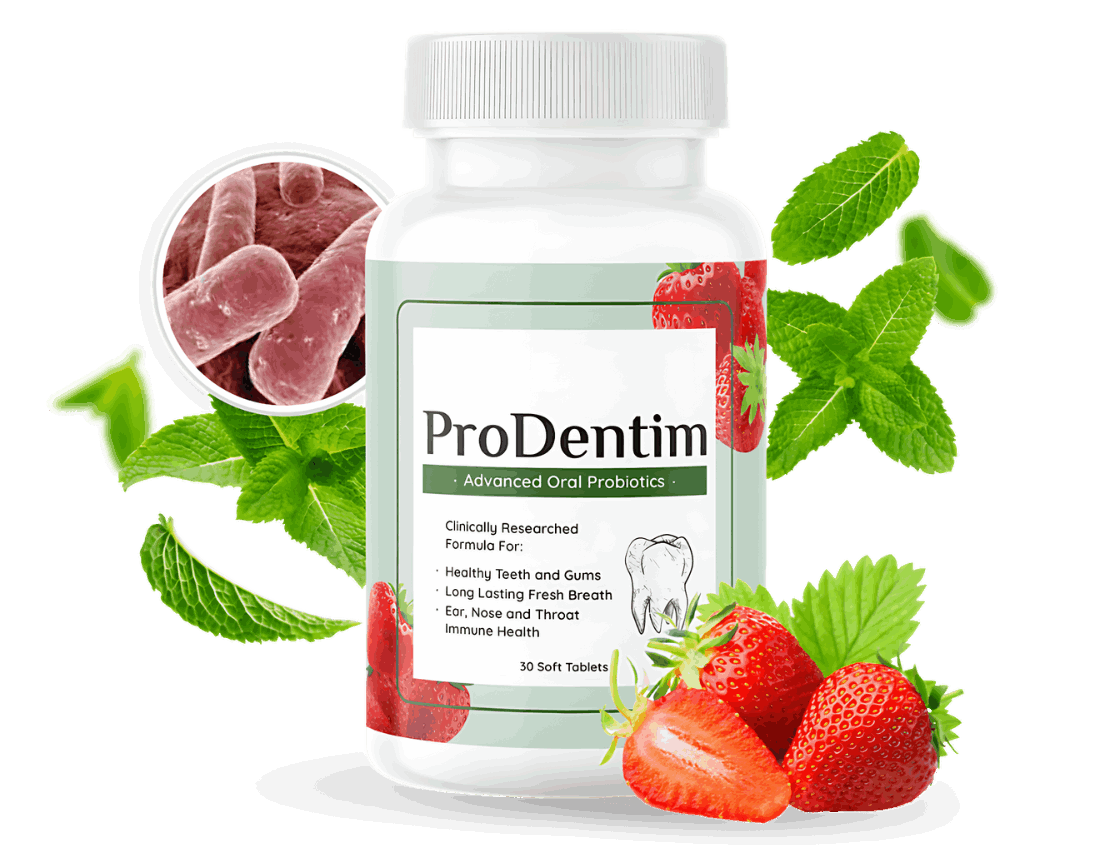
Add Oral Probiotics to Your Routine →Of all the natural approaches reviewed, oral probiotics require the most care in product selection. Not all probiotic products use oral-specific strains, oral-optimized delivery formats, or clinically studied doses. ProDentim is the most thoroughly formulated oral probiotic supplement in our analysis — with genuine scientific backing for its key strains, particularly L. reuteri.
⚠ Affiliate disclosure: We earn a commission if you purchase via the link above. This does not affect our honest assessment — we rate ProDentim 7.4/10 and openly acknowledge its weaknesses including price and overstated whitening claims.
Honest, research-backed answers to the most commonly searched questions about natural oral health approaches.
Continue your research with these related guides from our oral health resource library.
Your mouth hosts 700+ bacterial species in a complex ecosystem. Understanding this is the foundation of modern oral health. Beginner-friendly guide with research citations.
Read articleBleeding gums affects millions but is widely misunderstood. Know when it's simple gingivitis vs. when it signals something requiring professional care.
Read article3-week analysis of ProDentim's formula, ingredient research, user outcomes, and honest verdict on claims. What works, what doesn't, and who it's actually for.
Read full reviewProDentim — Best oral probiotic we've reviewed · 60-Day guarantee · From $49/bottle
Order →