- Your mouth hosts 700+ bacterial species — the balance between them determines gum health far more than brushing frequency alone
- Specific anaerobic bacteria (particularly P. gingivalis) produce toxins that trigger the immune inflammation that destroys gum tissue
- Oral dysbiosis — bacterial imbalance — is the true root cause of gingivitis and periodontitis, not just "poor hygiene"
- Bacterial biofilms (plaque) are deliberately engineered communities that protect pathogens from your immune system and antiseptics
- Evidence-based interventions including specific oral probiotic strains can rebalance the microbiome — not just treat symptoms
1. Your Mouth Is a Microbial Ecosystem — Not a Battleground
Most dental health messaging frames the relationship with mouth bacteria as a war: your job is to kill as many bacteria as possible through brushing, flossing, and antiseptic mouthwash. This framing is fundamentally incorrect — and it's partly why gum disease rates haven't meaningfully declined despite decades of "brush twice a day" campaigns.
The reality is that your mouth is home to a complex, dynamic ecosystem of over 700 bacterial species, collectively called the oral microbiome. The vast majority of these bacteria are either neutral or actively beneficial — they compete against harmful species for resources, produce antimicrobial compounds, regulate pH, support the mucosal immune system, and help break down food. Trying to eliminate all oral bacteria would be both impossible and harmful.
The critical concept to understand is balance. In a healthy mouth, beneficial and commensal bacteria dominate, keeping pathogenic species at low, manageable populations. Problems begin not when bacteria are present — they're always present — but when this balance shifts in favor of harmful species. This shift is called oral dysbiosis, and it's the true upstream cause of gum disease.
The oral microbiome refers to the entire community of microorganisms — bacteria, fungi, viruses, and archaea — that colonize the oral cavity. It's the second most diverse microbial community in the human body after the gut. Unlike the gut microbiome, oral bacteria are directly accessible to environmental interventions including probiotics, diet, and targeted supplementation.
2. The Key Pathogenic Bacteria That Cause Gum Disease
Not all oral bacteria are created equal. Research has identified specific bacterial species — particularly anaerobic (oxygen-avoiding) gram-negative bacteria — as the primary drivers of periodontal destruction. Understanding who these organisms are and how they operate explains why gum disease can persist even in people with meticulous hygiene habits.
The "Red Complex" — Periodontitis' Primary Offenders
In 1998, Socransky and colleagues published a landmark study defining the "red complex" — three bacterial species consistently and most strongly associated with advanced periodontal disease. These remain the most studied pathogenic oral bacteria in the literature today.
| Bacterial Species | Type | Primary Mechanism of Harm | Associated Condition |
|---|---|---|---|
| Porphyromonas gingivalis | ⚠ Pathogenic | Produces gingipains (proteases) that destroy collagen, evades immune detection, manipulates complement system | Chronic periodontitis, bone loss |
| Treponema denticola | ⚠ Pathogenic | Penetrates gum tissue, produces toxic byproducts that disrupt epithelial integrity and trigger inflammation | Aggressive periodontitis |
| Tannerella forsythia | ⚠ Pathogenic | Produces sialidase and other enzymes; synergistically amplifies P. gingivalis virulence | Advanced periodontitis |
| Fusobacterium nucleatum | ⚠ Bridging pathogen | Acts as a structural "bridge" connecting early colonizers to late pathogenic species in biofilms | Gingivitis to periodontitis transition |
| Streptococcus mutans | ⚠ Cariogenic | Converts dietary sugars to lactic acid, causing enamel demineralization | Dental caries (cavities) |
| Lactobacillus reuteri (probiotic strain) | ✓ Beneficial | Produces reuterin (broad-spectrum antimicrobial), competes with pathogens, reduces inflammation markers | Gum health protection |
| Streptococcus salivarius | ✓ Beneficial | Produces BLIS (bacteriocin-like inhibitory substances) that suppress harmful colonizers | Natural oral defense |
| Veillonella species | ● Commensal | Consumes lactic acid produced by Streptococcus — helps regulate pH | Acid buffering, cavity prevention |
What Makes P. gingivalis Particularly Dangerous
Porphyromonas gingivalis deserves special attention because it operates through unusually sophisticated mechanisms that have evolved specifically to subvert human immune defenses. Unlike most pathogens that simply invade and destroy, P. gingivalis employs a strategy researchers call "immune evasion through manipulation."
It produces gingipains — cysteine protease enzymes that degrade complement proteins, disabling a key early-warning component of the immune system. It can invade gingival epithelial cells and survive intracellularly, hiding from antibiotics and immune cells. Perhaps most notably, it doesn't destroy tissue directly — instead, it hijacks your own immune response, causing the inflammatory cascade that attacks your periodontal ligament and supporting bone.
The bone loss and tissue destruction in periodontitis is not caused directly by bacteria — it's caused by your own immune system's prolonged inflammatory response to bacterial toxins. This is why simply killing bacteria with antibiotics doesn't fully resolve periodontitis: the inflammatory cycle can persist even after pathogen loads are reduced. Addressing the underlying microbial imbalance is essential for breaking this cycle.
3. Understanding Oral Dysbiosis — Why the Balance Shifts
Knowing which bacteria are harmful doesn't explain why their populations sometimes explode at the expense of beneficial species. Oral dysbiosis — the shift in microbial community composition toward pathogen dominance — has multiple triggers, and understanding them is critical for addressing gum disease at the root rather than just managing symptoms.
The Stages of Dysbiosis Development
Common Triggers That Cause Dysbiosis
High-Sugar & Refined Carbohydrate Diets
Dietary sugars are selectively fermented by S. mutans and other acidogenic bacteria, producing lactic acid that creates a low-pH oral environment. Acidic conditions strongly favor pathogenic acid-tolerant species while suppressing beneficial bacteria that prefer neutral pH. Frequent sugar exposure essentially creates an environment engineered for pathogen dominance.
Antibiotic Use (Systemic or Topical Mouthwash)
Broad-spectrum antibiotics and even chlorhexidine mouthwash (a commonly recommended antiseptic) eliminate both harmful and beneficial bacterial species without discrimination. While they reduce total bacterial load temporarily, the disrupted ecosystem is often recolonized preferentially by fast-growing pathogenic species. Multiple courses of antibiotics are a significant risk factor for persistent oral dysbiosis.
Chronic Psychological Stress
The stress response elevates cortisol and activates the sympathetic nervous system, which reduces salivary flow and alters salivary composition. Saliva is one of the oral microbiome's primary protective mechanisms — it contains immunoglobulins (IgA), lysozyme, lactoferrin, and antimicrobial peptides that suppress pathogen overgrowth. Reduced saliva flow removes this natural protection, enabling pathogenic species to colonize more aggressively.
Smoking & Tobacco Use
Tobacco smoke dramatically alters the oral microbiome, increasing populations of anaerobic pathogens while reducing beneficial aerobic species. Nicotine also masks the clinical signs of gum disease — smokers often have less visible gum bleeding despite more severe underlying bone loss because nicotine constricts blood vessels. This masking effect frequently causes smokers to underestimate their periodontal disease severity.
Hormonal Changes
Hormonal fluctuations during puberty, pregnancy, menstrual cycles, and menopause significantly alter the oral microbiome. Elevated estrogen and progesterone levels during pregnancy, for example, create conditions that selectively amplify certain pathogenic species — this is why pregnancy gingivitis is a clinically recognized condition affecting up to 70% of pregnant women, even those with previously healthy gums.
4. Bacterial Biofilms — Why Plaque Is More Dangerous Than You Think
What dentists call "plaque" is more accurately described as a bacterial biofilm — a sophisticated, deliberately engineered microbial community that is fundamentally different from the same bacteria floating freely in saliva. Understanding biofilm biology explains why gum disease is so persistently difficult to manage with brushing and antiseptics alone.
How Biofilms Form and Protect Pathogens
Biofilm formation follows a predictable sequence. Initial colonizers (primarily streptococcal species) attach to the tooth surface within minutes of cleaning. They excrete adhesion molecules and begin producing an extracellular polymeric matrix — essentially a protective fortress built from proteins, polysaccharides, and nucleic acids. This matrix performs several critical defensive functions:
The biofilm matrix reduces antibiotic penetration by 100–1,000 times compared to planktonic (free-floating) bacteria. The same applies to antiseptic mouthwashes — chlorhexidine at concentrations effective against free bacteria may be largely ineffective against bacteria protected within established biofilms. Physical disruption (brushing, scaling) remains the most effective removal method, but cannot reach subgingival areas deeper than ~3mm.
This is why professional scaling and root planing remains the gold standard for treating active periodontitis — it physically disrupts and removes subgingival biofilm that no topical agent can fully penetrate.
As biofilm matures (typically over days to weeks), its composition shifts from early aerobic colonizers to later anaerobic species — exactly the conditions that favor the red complex pathogens. F. nucleatum plays a specific bridging role, physically connecting early colonizers to late pathogenic species and enabling the architectural complexity that makes mature biofilms so resilient.
Subgingival biofilm (below the gumline) is particularly dangerous because it exists in the oxygen-depleted environment that anaerobic pathogens prefer, is inaccessible to normal brushing, and is in close proximity to gingival tissue where it can directly trigger inflammatory responses.
5. From Gingivitis to Periodontitis — The Stages of Bacterial Damage
Bacterial dysbiosis and biofilm accumulation don't cause immediate irreversible damage. Gum disease progresses through defined stages, and the reversibility of each stage depends heavily on when intervention occurs. Early identification and correction of microbial imbalance is dramatically more effective than treating advanced disease.
Stage 1: Gingivitis (Fully Reversible)
Gingivitis is the earliest clinical manifestation of bacterial-driven gum inflammation. The gum tissue becomes inflamed and engorged in response to bacterial toxins, and small blood vessels near the surface dilate and become more fragile — causing the characteristic bleeding on brushing that affects an estimated 50% of adults at any given time.
Critically, gingivitis involves inflammation of soft tissue only. The underlying bone and periodontal ligament remain intact. With proper biofilm removal and microbial rebalancing, gingivitis is completely reversible — gums return to healthy pink, firm tissue with no bleeding. This is why addressing bacterial imbalance early is so important: the window for full recovery without permanent damage is still open.
Stage 2: Chronic Periodontitis (Partially Reversible)
When gingivitis persists — typically because the underlying microbial imbalance remains unaddressed — inflammation extends beyond soft tissue into the supporting structures: the periodontal ligament and alveolar bone. Inflammatory cytokines (particularly IL-1β, TNF-α, and PGE2) activate osteoclasts — cells that break down bone — leading to the bone and attachment loss that characterizes periodontitis.
Periodontal pockets (gaps between tooth and gum) deepen, creating even more anaerobic space for pathogen colonization — a self-reinforcing cycle. Some tissue and bone loss can be managed with professional treatment, but cannot be fully reversed without surgical intervention.
Stage 3: Advanced/Aggressive Periodontitis (Minimal Reversibility)
Advanced periodontitis involves significant bone loss (often visible on dental X-rays), deep periodontal pockets (5mm or greater), tooth mobility, and in severe cases, tooth loss. At this stage, treatment goals shift from cure to disease management and prevention of further progression. Surgical procedures (bone grafting, guided tissue regeneration) may restore some lost structure, but complete reversal is not achievable.
The most important implication of this staging is that addressing oral bacterial imbalance during gingivitis — before any bone or ligament involvement — allows complete recovery. By the time periodontitis is diagnosed, the opportunity for full restoration has passed. This makes early microbiome-level intervention, not just symptom management, the highest-value strategy for long-term oral health.
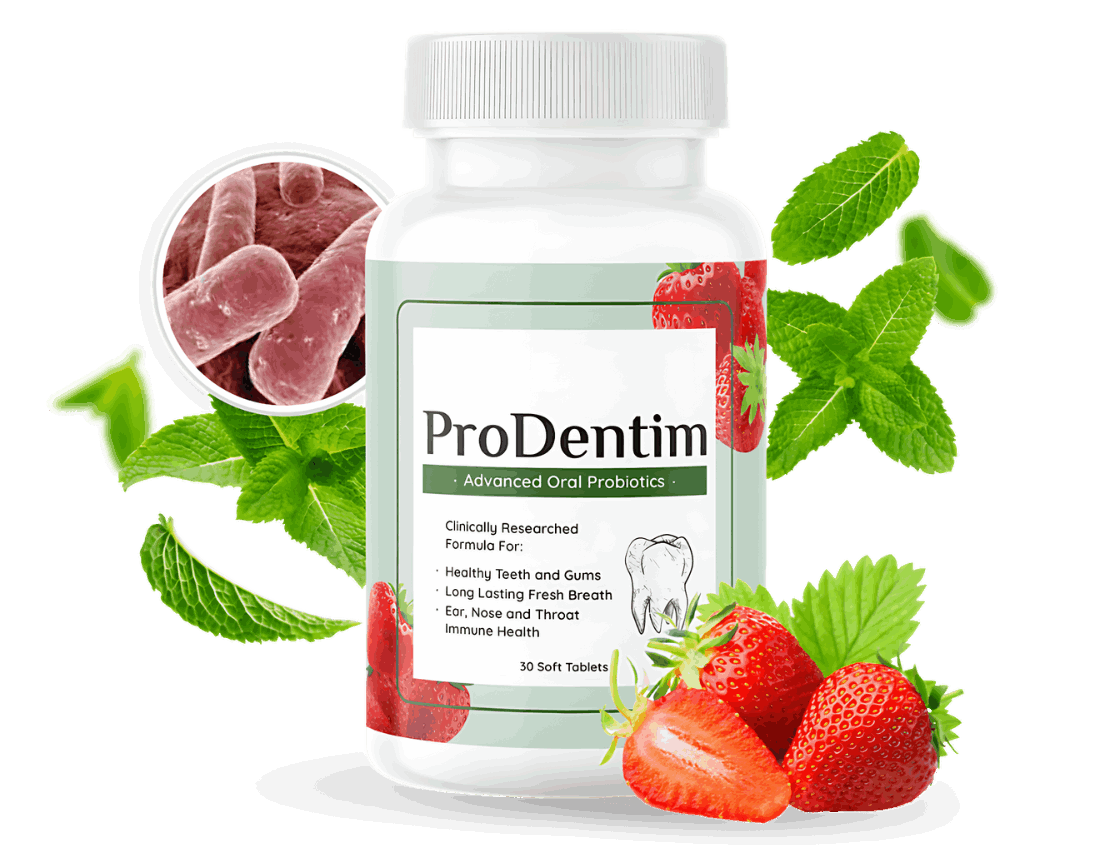
Addressing Oral Dysbiosis With Probiotics
ProDentim contains L. reuteri — the probiotic strain with the strongest clinical evidence for reducing gingival inflammation and plaque index scores. If bacterial imbalance is your underlying concern, this is the mechanism-specific approach backed by published randomized controlled trials.
6. The Bacteria-Bad Breath Connection — It's Not a Hygiene Failure
Chronic bad breath (halitosis) is one of the most socially impactful manifestations of oral bacterial imbalance, yet it's consistently misunderstood as a personal hygiene problem. The evidence tells a different story: chronic halitosis is almost entirely a microbial problem — and mints, gum, and mouthwash address only the symptom without touching the cause.
The primary mechanism of bacterial halitosis involves volatile sulfur compounds (VSCs) — hydrogen sulfide (H₂S), methyl mercaptan (CH₃SH), and dimethyl sulfide — produced by anaerobic gram-negative bacteria in the oral cavity and on the posterior tongue. The species most strongly implicated include T. denticola, P. gingivalis, F. nucleatum, and various Prevotella species.
These bacteria metabolize sulfur-containing amino acids (particularly cysteine and methionine from food debris, saliva proteins, and dead cells) into VSCs as a metabolic byproduct. The posterior third of the tongue is the primary production site — its rough papillary surface creates an anaerobic microenvironment that harbors high concentrations of VSC-producing anaerobes.
Antiseptic mouthwashes provide 2–4 hours of VSC reduction by temporarily reducing bacterial populations. However, they don't selectively eliminate VSC-producing species, and they simultaneously suppress beneficial bacteria that would naturally compete with and displace halitosis-associated pathogens. After the antiseptic clears, pathogenic species often recolonize more aggressively in the absence of competition. A probiotic approach — introducing beneficial competing species — offers more sustainable halitosis management by addressing the microbial imbalance rather than temporarily suppressing all bacteria.
7. Evidence-Based Interventions — What the Research Actually Supports
Given the microbial and biofilm-based understanding of gum disease, which interventions have meaningful clinical evidence? This section summarizes the evidence hierarchy, distinguishing between mechanical approaches, pharmacological options, and emerging microbiome-targeted strategies.
Professional Scaling & Root Planing
The gold standard for treating established gingivitis and periodontitis. Physical disruption and removal of subgingival biofilm by a dental professional remains irreplaceable. No supplement or mouthwash can substitute for regular professional cleaning — which mechanically disrupts biofilm structures that topical agents cannot penetrate.
Strongest evidenceSystematic Mechanical Hygiene
Daily interdental cleaning (floss, interdental brushes, or water flossers) combined with modified Bass technique brushing removes supragingival biofilm before it matures and shifts composition toward pathogenic species. Most effective when consistent — timing matters less than frequency and technique.
Strong evidenceXylitol-Containing Products
S. mutans cannot metabolize xylitol — a natural sugar alcohol — and it inhibits the bacterium's ability to produce lactic acid and adhere to tooth surfaces. Chewing xylitol gum 3–5x daily has RCT-level evidence for caries reduction. Effect on periodontal pathogens is less established but supportive.
Moderate evidenceOral-Specific Probiotics
L. reuteri lozenges/dissolving tablets show the most consistent clinical evidence among probiotic interventions: multiple RCTs demonstrate significant plaque index and gingival bleeding score reductions at 4–12 weeks. Works via competitive exclusion and reuterin production. Adjunctive to, not a replacement for, mechanical hygiene.
Moderate–strong evidenceTargeted Antibiotic Therapy
Systemic antibiotics (metronidazole, amoxicillin, doxycycline) are prescribed for aggressive or refractory periodontitis as an adjunct to mechanical therapy. Evidence supports short-term benefit, but disruption of the broader oral microbiome is a documented concern, and antibiotic resistance limits long-term use.
Moderate evidence (prescribed only)Dietary Modification
Reducing dietary sugar frequency (how often, not just how much) has strong mechanistic rationale for shifting the oral microbiome toward a healthier pH-neutral composition. Increasing dietary fiber and polyphenol-rich foods (green tea, berries) has emerging evidence for supporting beneficial oral bacteria populations.
Emerging evidence8. Oral Probiotics and Gum Disease — The Emerging Science
Probiotic interventions for oral health represent one of the most promising and rapidly developing areas in dental research. Rather than attempting to eliminate bacteria broadly, the probiotic approach aims to introduce beneficial competing species that displace pathogens through ecological mechanisms — a strategy with several theoretical and demonstrated advantages over antiseptic approaches.
🔬 Clinically Studied Probiotic Strains for Oral Health
Among dozens of studied probiotic candidates, three strains have accumulated the most consistent peer-reviewed evidence for oral health applications:
How Probiotics Work Differently From Antiseptics
The mechanistic difference between probiotic and antiseptic approaches to oral dysbiosis is important to understand:
Antiseptic mouthwash works by chemical toxicity — it kills bacteria indiscriminately. Short-term bacterial load reduction is achieved, but the ecological void created is often recolonized by whichever species can grow fastest — frequently pathogens. Regular antiseptic use disrupts the competitive balance that beneficial bacteria normally maintain against pathogens.
Oral probiotics work by ecological competition — introduced beneficial species compete with pathogens for adhesion sites on gum tissue, compete for nutrients, produce antimicrobial compounds (like reuterin) that selectively target gram-negative anaerobes, and stimulate immune responses that favor pathogen clearance. This approach restores ecosystem balance rather than chemically suppressing all bacteria simultaneously.
Oral microbiome rebalancing through probiotic intervention is a gradual process. Clinical studies on L. reuteri show measurable improvements in plaque and bleeding scores at 4 weeks, with more significant results at 8–12 weeks of consistent daily use. Results are not immediate — this is a microbial ecosystem intervention, not a chemical treatment. Discontinuing too early is the most common reason probiotic approaches fail to show results in real-world use.